
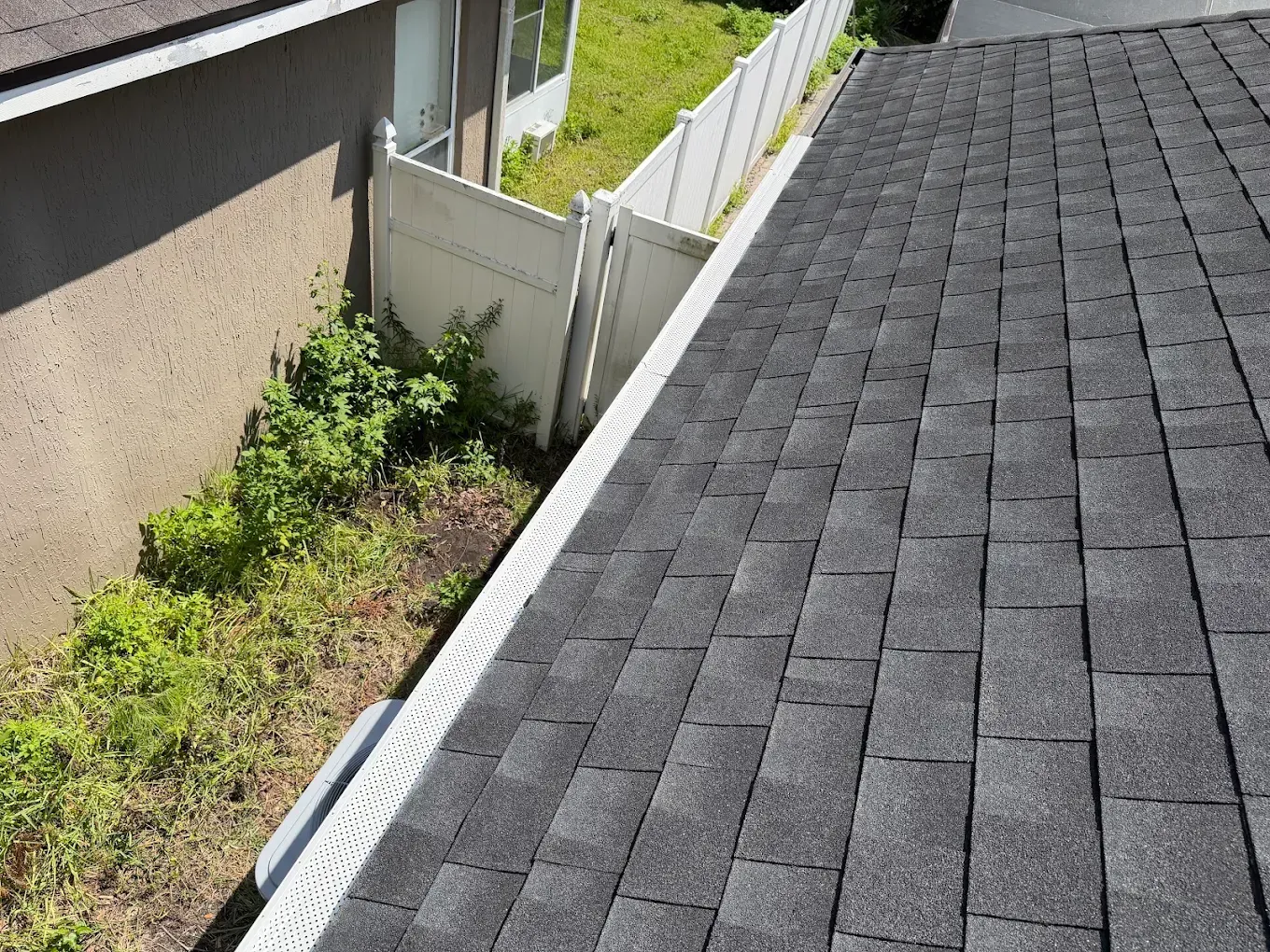
Shingles Cleaned Without Granule Stripping
Roof Soft Washing in Jacksonville for roofs affected by algae growth and granule deterioration
Black streaks and green patches across shingles signal algae colonization, a condition accelerated by Florida's intense sun and year-round humidity. Hard pressure removes the visible stains but also strips protective granules, shortening roof life by exposing the asphalt layer beneath. Affordable Exterior Cleaning specializes in soft wash roof cleaning that eliminates organic growth while preserving the granule layer critical to shingle durability in Jacksonville's climate.
The process uses low-pressure application with specialized solutions that kill algae and moss at the root, preventing regrowth for longer than surface-level rinsing. A written checklist guides technicians through ridge vents, valleys, and flashing details where moisture accumulates and organisms take hold first. This methodical approach prevents the uneven cleaning that leaves some sections visibly darker than others.
Arrange an on-site roof assessment to identify algae coverage and granule condition..
Why Soft Wash Roof Cleaning Extends Shingle Life
Soft wash application delivers cleaning solution at pressures low enough to avoid dislodging granules, which protect shingles from UV degradation and thermal cycling. The solution penetrates algae colonies and moss root structures, killing organisms without mechanical scrubbing that would accelerate wear. Technicians follow a written service checklist to ensure coverage across all roof planes, including north-facing slopes where shade and moisture create ideal conditions for biological growth.
Once the service is complete, shingles appear uniform in color, with black streaks and green discoloration fully removed. The granule layer remains intact, which you can verify by checking gutters for excessive granule shedding after the next rain. Valleys and ridge lines look as clean as center sections, and flashing around vents and chimneys shows no staining. The roof's original color returns, improving curb appeal and signaling to insurance inspectors that the structure is maintained.
The same technician handles each job, ensuring familiarity with your roof's pitch, material type, and problem areas. Bonded and insured employees perform all work, and the company has earned 13 five-star reviews within two months of operation, reflecting consistent technique application..
Common Roof Soft Washing Questions
Property owners typically want to understand how soft wash differs from traditional methods and why it matters for Florida roofs exposed to continuous sun and moisture..
What causes the black streaks on roofs in Jacksonville?
The streaks are Gloeocapsa magma, a photosynthetic bacteria that feeds on limestone filler in shingles and thrives in humid climates, with Florida's year-round moisture providing ideal growth conditions.
How does soft washing prevent granule loss?
Soft wash uses low-pressure application that relies on chemical action rather than water force, allowing cleaning solutions to dissolve organic matter without the mechanical abrasion that dislodges protective granules.
When should roof soft washing be scheduled?
Most roofs benefit from cleaning every 18 to 24 months, though properties with heavy tree cover or north-facing slopes may require annual service due to accelerated algae and moss accumulation in shaded areas.
Why does the written checklist improve results?
The checklist ensures technicians address all roof planes, valleys, and flashing details systematically, preventing missed sections that would show staining after surrounding areas are cleaned.
How long do soft wash results last?
Results typically hold for 18 to 24 months, depending on shade coverage and humidity exposure, with organisms regrowing faster on shaded or moisture-retaining sections than on sun-exposed slopes.
Affordable Exterior Cleaning trains crews on technique consistency to maintain quality across all jobs. Contact the company for a roof-specific cleaning estimate based on shingle type and current algae coverage.